Why Is My Dishwasher Leaking From the Bottom? 6 Proven Fixes
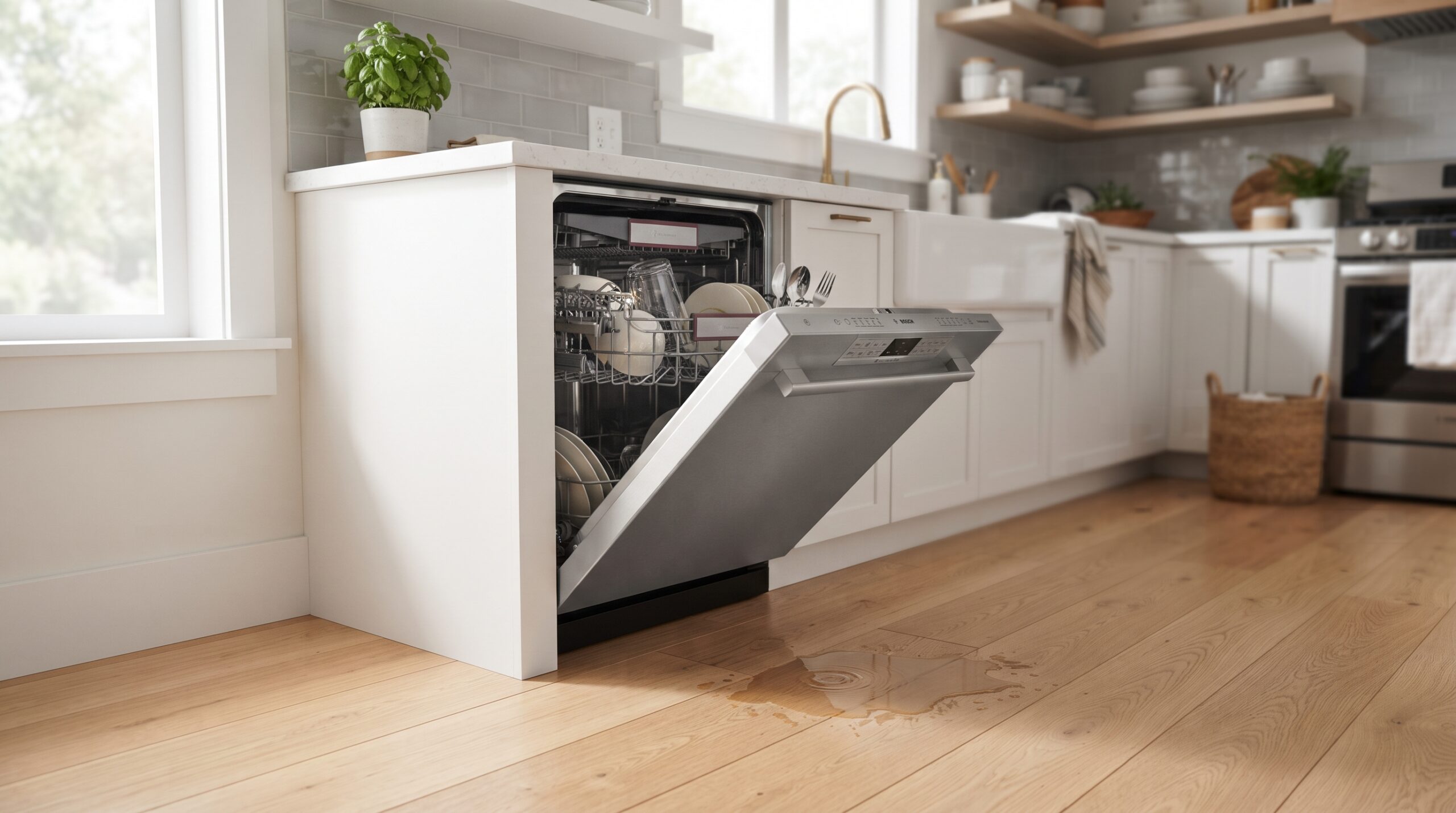
Why is my dishwasher leaking from the bottom was the question I found myself asking on my hands and knees, towel in hand, watching a slow puddle spread across the kitchen floor every time a cycle ran. It’s an alarming thing to notice, but after dealing with it myself and talking to a technician friend about it, I learned this is almost always traceable to one of a handful of specific causes — not a sign the whole unit is failing.
Here’s what’s actually behind it, and how to narrow down which one applies to you.
A Damaged or Worn Door Gasket
This is, by a wide margin, the most common reason why is my dishwasher leaking from the bottom, especially in units over 3-4 years old. The door gasket is the rubber seal running around the edge of the dishwasher door, and its job is to keep water contained inside during the wash cycle. Over time, this seal can crack, flatten, or gather debris, allowing water to seep out along the bottom edge of the door with each cycle.
How to check: Run your finger along the entire gasket while the dishwasher is off, feeling for any stiff, cracked, or flattened sections, particularly along the bottom. A gasket that’s lost its flexibility or has visible tears needs replacing, which is usually an affordable and straightforward DIY part swap on most models.
An Overfilled or Clogged Detergent Dispenser
Using too much detergent, or using the wrong type (regular dish soap instead of dishwasher-specific detergent) creates excessive suds. These suds can overflow past the door seal during the wash cycle, appearing exactly like a leak even though the actual mechanical parts of the dishwasher are working fine.
This is one of the more surprising answers to why is my dishwasher leaking from the bottom, since it has nothing to do with a broken part at all.
Fix: Always use detergent specifically designed for dishwashers, and follow the recommended amount on the packaging rather than estimating. If you’ve accidentally used regular dish soap, run an empty cycle to clear out the excess suds completely before using the dishwasher normally again.
This same detergent-related issue can also affect cleaning performance — if your dishes are coming out dirty rather than leaking, our guide on dishwasher not cleaning dishes covers that separately.
This same detergent-related issue can also affect cleaning performance — if your dishes are coming out dirty rather than leaking, our guide on dishwasher not cleaning dishes covers that separately.
A Cracked or Loose Water Inlet Valve
The inlet valve controls water entering the dishwasher at the start of each cycle. If this valve develops a crack, or the connection where it attaches to the water line loosens over time, water can leak out from underneath the unit before the wash cycle even properly begins.
How to check: With the dishwasher pulled out slightly (if accessible), look for moisture or drips near the connection point at the back or bottom. This typically requires a technician to replace, since it involves shutting off the water supply line.
A Damaged or Cracked Tub
In older dishwashers, particularly plastic tub models, small cracks can develop in the tub itself from years of use, temperature changes, or stress from loading heavy dishes. Water then slowly seeps through these cracks during cycles, often pooling underneath the unit rather than being immediately visible from the front.
What this looks like: Unlike a gasket leak (which tends to appear right at the door), a cracked tub often causes water to appear underneath the dishwasher itself, sometimes only noticeable when you pull the unit out or check the cabinet floor beneath it.
A Loose or Damaged Drain Hose Connection
The drain hose carries used water away from the dishwasher after each cycle. If the connection at either end (dishwasher side or under-sink side) has loosened, or if the hose itself has a crack or hole, water can leak during the drain phase specifically, rather than throughout the entire cycle.
How to check: If the leaking seems to happen mainly toward the end of a cycle rather than throughout, this narrows the cause toward the drain hose rather than the door seal or inlet valve.
Using the Wrong Type of Dishwasher or Overloading It
Overloading the dishwasher, or using dishes and pans that aren’t properly dishwasher-safe, can sometimes cause water to splash beyond normal spray patterns, especially if large items block the door from sealing completely. This is one of the simpler causes to rule out before assuming a mechanical part has failed.
Quick Diagnostic Order
- Check the door gasket for cracks, stiffness, or debris
- Confirm you’re using the correct detergent in the right amount
- Note whether the leak happens throughout the cycle or mainly at the end (points toward drain hose)
- Check underneath the unit for a possible cracked tub
- Inspect the water inlet valve connection if accessible
- Make sure the dishwasher isn’t overloaded, blocking the door seal
Working through this list in order helps answer why is my dishwasher leaking from the bottom faster than guessing at random parts.
When to Call a Technician
Gasket replacement and detergent adjustments are safe, affordable DIY fixes most people can handle themselves. However, issues involving the water inlet valve, a cracked tub, or internal drain hose connections often require partially disassembling the unit and are generally better handled by a licensed appliance technician, particularly since water damage to surrounding cabinetry can become costly if the underlying cause isn’t fully resolved.
For general appliance safety and water damage prevention tips, the U.S. Consumer Product Safety Commission offers helpful home safety guidance.
For general appliance safety and water damage prevention tips, the U.S. Consumer Product Safety Commission offers helpful home safety guidance.
Final Thoughts
If you’ve been wondering why is my dishwasher leaking from the bottom, the answer is rarely a sign you need a full replacement — in most cases, it’s a worn door gasket or too much detergent, both inexpensive and quick to address. Watch closely for exactly when the leak happens during the cycle, since that timing detail is often the biggest clue toward narrowing down the actual cause.
FAQs
Q: Is it safe to keep using a dishwasher that’s leaking?
For a minor, occasional leak while you address the cause, it’s generally fine short-term, but prolonged leaking risks water damage to flooring and cabinetry, so it’s worth addressing promptly.
Q: How much does it cost to replace a dishwasher door gasket?
Replacement gaskets typically cost between $15-40 depending on the brand and model, and installation is usually straightforward enough for a confident DIYer.
Q: Can too much detergent really cause a dishwasher to leak?
Yes, excess suds are one of the most common and overlooked causes of what looks like a leak, since the foam can escape past the door seal during the wash cycle.